Grinding during a gear change is a mechanical warning that deserves attention. In manual vehicles, the sound may point toward clutch-release problems, synchronizer wear, incorrect shifting technique, or transmission issues. Automatic transmissions can also produce abnormal mechanical noises, although true gear grinding is less typical. Identifying exactly when the sound occurs is the first step toward finding the responsible component.
Determine Exactly When the Grinding Happens
A noise that appears only while selecting one particular gear provides different information from grinding that occurs in several gears. The same is true for a sound heard only when the clutch pedal is pressed.
Notice whether the transmission is cold or warm and whether the vehicle is stationary or moving. Those details help narrow the possibilities without requiring the driver to repeatedly force the transmission into a gear that resists.
People exploring fleet drivetrain maintenance may encounter broad servicing guidance, but sound-based problems are best diagnosed from the affected vehicle because similar noises can originate from several nearby components.
Manual Clutch Problems Can Affect Shifting
A manual transmission depends on the clutch fully separating engine power from the gearbox during a shift. If the clutch drags instead of releasing correctly, gears may continue rotating and resist smooth selection.
Hydraulic clutch problems, linkage issues, worn components, or incorrect adjustment on applicable systems can contribute. General road vehicle maintenance guidance may encourage routine checks, but clutch diagnosis requires understanding the vehicle’s specific release system.
Synchronizers Also Deserve Attention
Synchronizers help match rotational speeds as gears are selected in many manual transmissions. Wear can make a particular gear increasingly difficult to engage without grinding.
A problem isolated to one gear may therefore point toward a different area than grinding present during nearly every shift.
| Grinding Pattern | Possible Connection | What to Observe |
|---|---|---|
| One gear only | Synchronizer wear | Which gear is affected |
| Several gears | Clutch not releasing | Pedal behavior |
| Reverse grinding | Shaft still rotating | Delay before selection |
| Noise while driving | Bearing/gear issue | Speed and load changes |
Fluid and Internal Wear Can Contribute
Manual transmissions also rely on the correct lubricant. Low lubricant from a leak can increase wear and noise, while using an incorrect fluid may interfere with shift quality in some designs.
Broader vehicle inspection information can support regular maintenance habits, but gearbox lubricant specifications are particularly important. Always use the exact type required by the manufacturer rather than substituting fluid based only on viscosity or appearance.
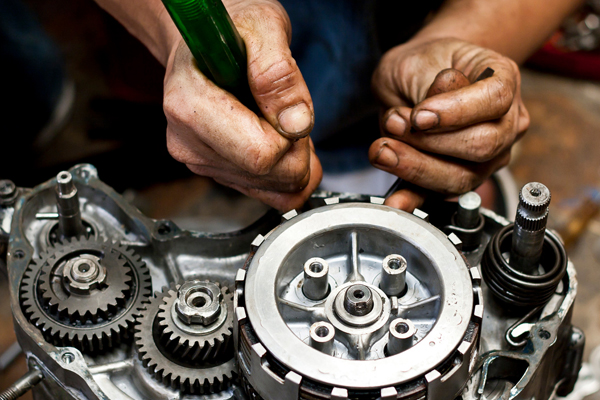
Bearings, gears, forks, and other internal parts can also produce abnormal sounds as they wear.
Don’t Force a Gear That Resists Engagement
One damaging habit is pushing harder on the shifter when a gear grinds. Force doesn’t solve the speed mismatch or mechanical fault; it may increase wear on synchronizers and related components.
Another mistake is assuming every grinding noise means the transmission itself must be replaced. Clutch hydraulics, release mechanisms, linkage, mounts, or other drivetrain components can change the way shifting feels and sounds. Diagnosis should separate those possibilities before expensive parts are ordered.
Respond Before the Noise Becomes Constant
If grinding begins suddenly, stop repeatedly testing the affected gear. Note the gear, vehicle speed, clutch position, temperature, and whether the problem changes after several shifts.
Check for visible fluid leaks and changes in clutch-pedal feel. If the transmission becomes difficult to select, jumps out of gear, produces heavy mechanical noise while moving, or the clutch stops disengaging normally, arrange professional inspection. Forcing the vehicle to continue operating can turn localized wear into broader gearbox damage.
Frequently Asked Questions
Why does Reverse sometimes grind in a manual car?
Reverse may grind if transmission components are still rotating when the gear is selected or if the clutch isn’t fully releasing. Pausing briefly with the clutch fully depressed may help, but repeated grinding warrants inspection.
Can low transmission fluid cause grinding noises?
Low lubricant can contribute to increased friction, heat, bearing noise, and poor shifting. The level and specification should be checked correctly, and any leak responsible for fluid loss should be repaired.
Does grinding mean I need a new transmission?
Not automatically. The cause may involve clutch operation, linkage, synchronizers, bearings, lubricant, or internal gears. A diagnosis is needed to determine whether adjustment, component repair, rebuilding, or replacement is appropriate.
Treat Grinding as a Warning, Not a Normal Shift Sound
Gear grinding usually becomes more expensive when drivers keep forcing shifts and hoping the sound disappears. Pay attention to which gear is affected, check clutch behavior and lubricant condition, and stop deliberately reproducing the noise. A focused inspection can distinguish an external clutch or linkage problem from internal transmission wear and give you a clearer repair path before additional components suffer damage.