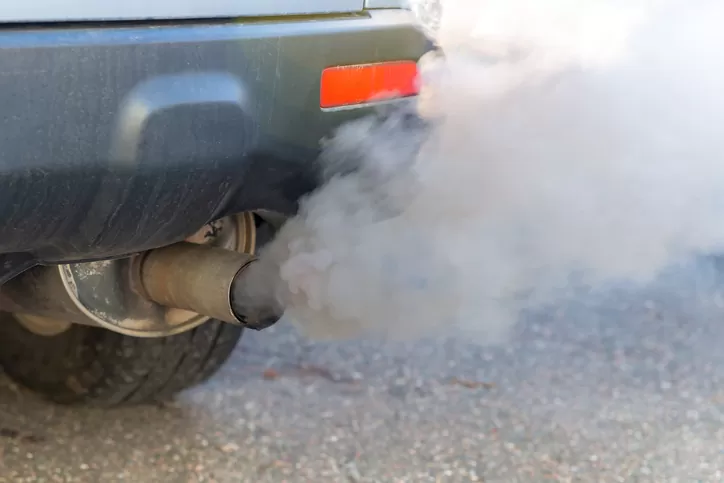
A sudden change in exhaust smoke can reveal what is happening inside the engine long before a more obvious failure appears. Excessive exhaust smoke may involve fuel mixture problems, oil entering the combustion chambers, coolant reaching places it shouldn’t, or normal condensation under certain conditions. Color, duration, smell, and engine behavior all help separate these possibilities.
Start by Identifying the Smoke Color
Smoke color is one of the most useful initial clues. Blue or blue-gray smoke commonly suggests oil is being burned, while dense black smoke can indicate excessive fuel or incomplete combustion.
White vapor requires more context. Light vapor on a cold morning can simply be condensation, while persistent thick white exhaust after the engine warms may justify checking for coolant-related problems.
Duration Matters as Much as Appearance
A short puff during startup means something different from smoke that continues during acceleration. Oil leaking past valve seals, for example, can create a different pattern from oil entering through worn piston rings.
Owners reading car ownership material may encounter many smoke-color explanations, but the duration and driving condition should always be considered alongside the color itself.
Blue Smoke Can Point Toward Oil Consumption
Blue smoke means oil may be reaching the combustion process. Possible routes include worn piston rings, valve-guide or seal problems, turbocharger faults on equipped vehicles, or crankcase ventilation problems.
Check the engine oil level regularly if blue smoke appears. Falling oil level together with visible smoke strengthens the case for an oil-consumption problem and helps establish how quickly the issue is developing.
General engine-oriented resources can provide background terminology, but compression, leak-down, turbo, or ventilation-system testing may be needed to identify the actual path.
Black Smoke Suggests Too Much Fuel or Too Little Air
Gasoline and diesel engines can produce dark exhaust when combustion is excessively rich or incomplete. Depending on the vehicle, possible causes include fuel-injector problems, airflow restrictions, sensor faults, control-system errors, or fuel-delivery issues.
Fuel economy may decline at the same time. Soot around the exhaust outlet, rough running, hesitation, or a warning light can provide additional evidence.
| Smoke Appearance | Possible Connection | What to Observe |
|---|---|---|
| Blue or blue-gray | Burning oil | Oil level and consumption |
| Thick black | Rich combustion | Fuel use and engine running |
| Persistent white | Coolant or combustion issue | Coolant level and temperature |
| Light cold vapor | Condensation | Usually fades when warm |
Persistent White Smoke Needs Context
Water vapor is a normal combustion byproduct, so some visible exhaust in cool weather is expected. Concern increases when thick white smoke continues after full warm-up, especially if coolant is disappearing or the engine temperature rises.
Useful general engine-care references may help readers understand maintenance terms, but persistent coolant loss should be investigated directly. A leaking head gasket is one possibility, though intake components, cylinder-head problems, or other cooling-system faults may create related symptoms depending on engine design.
Smoke Color Alone Does Not Confirm the Repair
Choosing a repair from exhaust color alone is risky. Blue smoke does not automatically mean the entire engine needs rebuilding, and white exhaust does not automatically prove a failed head gasket.
Conditions also matter. Brief condensation can look dramatic in cold air, while small oil leaks into combustion may produce only occasional smoke. Combine the smoke pattern with fluid levels, fault codes, engine temperature, operating conditions, and appropriate testing before deciding what has failed.
Frequently Asked Questions
Is white exhaust smoke always a bad sign?
No. Thin white vapor during cold starts can be ordinary condensation. Persistent thick smoke after warm-up, particularly with coolant loss or overheating, deserves inspection.
What causes blue smoke when accelerating?
Oil entering the combustion chambers can cause blue smoke. Possible sources include piston rings, turbocharger seals, valve-related wear, or crankcase ventilation problems.
Why does my car produce black exhaust smoke?
Black smoke commonly indicates excessive fuel, insufficient air, or incomplete combustion. Fuel-injector faults, airflow restrictions, sensors, or other engine-control problems may contribute.
Use the Smoke Pattern as a Diagnostic Clue
Exhaust smoke is valuable information, but it should start the diagnosis rather than finish it. Note the color, temperature, duration, driving condition, fluid levels, and any warning lights before arranging tests. Addressing abnormal smoke early can limit oil loss, overheating, catalytic-converter damage, poor fuel economy, and larger repairs that develop when the underlying fault continues.