
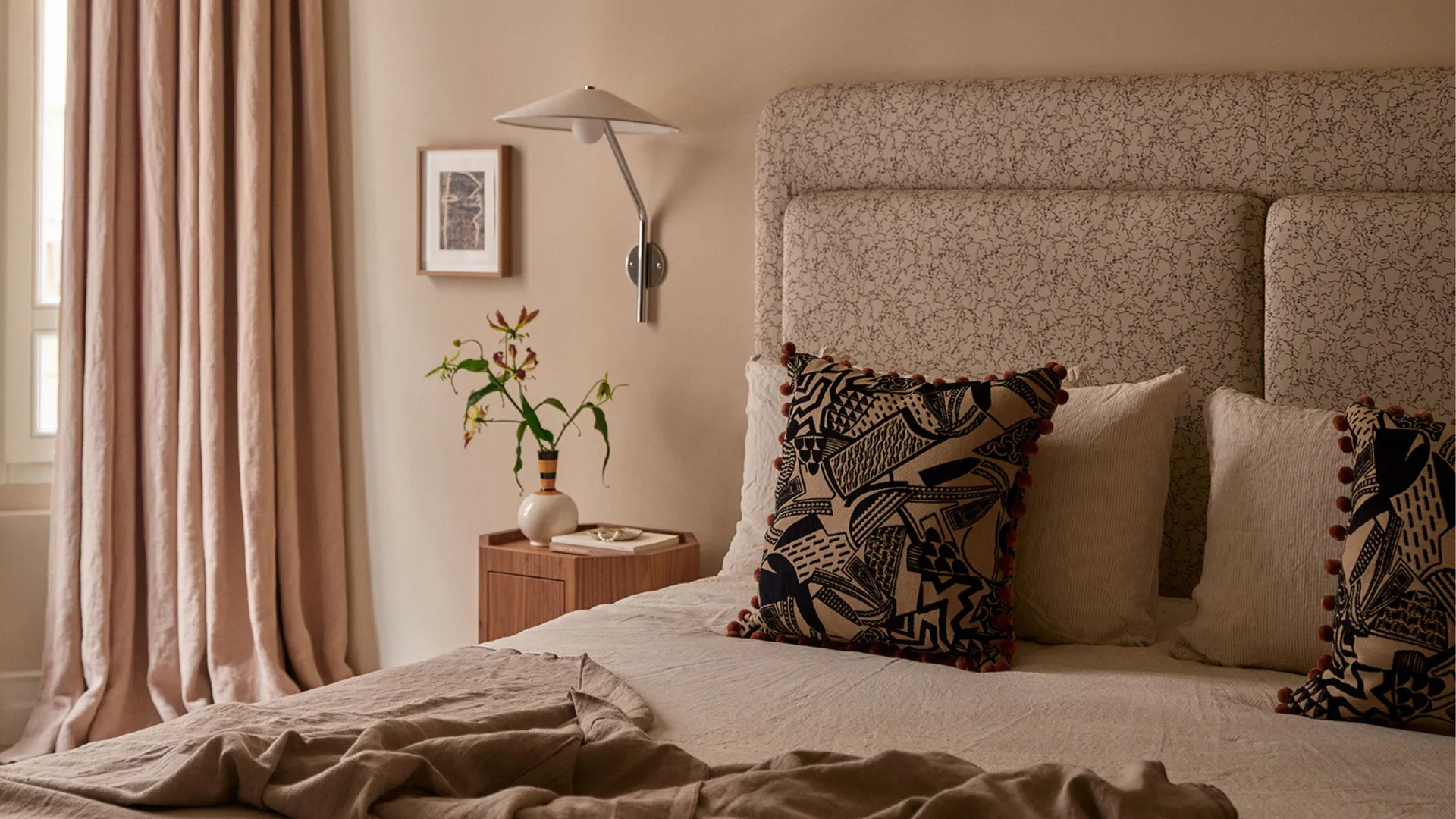
Neutral rooms often become boring for a simple reason: everything has the same visual strength. Beige walls, beige upholstery, pale flooring, and similar accessories can blend into one flat surface. Bland neutral rooms gain character when contrast comes from texture, shape, material, and tone instead of large amounts of color.
You can keep a quiet palette and still create a room with personality.
Build Contrast Within the Neutral Palette
Neutral does not mean using one shade repeatedly. Warm white, sand, mushroom, taupe, charcoal, cream, and natural wood can all work together.
Combining light, medium, and darker values creates depth even when the overall palette remains restrained.
Mix Warm and Cool Carefully
A room filled only with yellow-toned beige may feel dated, while too many gray neutrals can feel cold.
Mixing temperatures works best when one direction remains dominant and the other appears in smaller supporting details.
Make Texture Do the Decorative Work
Texture becomes more noticeable when strong color is absent. Linen, boucle, wood grain, stone, woven fibers, plaster-like walls, and matte ceramics create differences your eye can detect without introducing visual chaos.
Looking through neutral interior inspiration can reveal how layered materials prevent simple palettes from appearing unfinished.
| Flat Element | Possible Upgrade | Added Character |
|---|---|---|
| Plain sofa | Textured cushions | Soft contrast |
| Empty wall | Plaster-style finish | Subtle depth |
| Basic table | Natural wood | Visible grain |
| Smooth floor | Woven rug | Tactile layer |
Introduce Stronger Shapes
Rooms can feel bland because the furniture silhouettes are too similar. If every item is rectangular, clean, and low, the space lacks movement.
Curved chairs, rounded tables, sculptural lamps, irregular ceramics, or oversized branches can break that pattern. The softer mood found in many restful home interiors often comes from shape variation as much as color.
Add One Noticeable Dark Note
A little black, deep brown, bronze, or charcoal can sharpen a neutral room. Try it through a lamp base, picture frame, chair leg, or small table.
You usually need less dark contrast than expected.
Borrow Character From Natural Materials
Stone, timber, rattan, clay, greenery, and weathered surfaces bring variation without requiring bright colors. Natural materials also age differently, which helps rooms feel less manufactured.
Many outdoor decorating concepts rely on exactly this mix of subtle tones and material contrast, making them useful references for indoor neutral spaces as well.
Don’t Solve Blandness by Adding Random Accent Colors
The common reaction to a boring neutral room is introducing several bright cushions, prints, and accessories. That can disguise the problem without fixing it.
If the room lacks texture, scale, and contrast, more color may simply create disconnected decoration. Start with material and shape. Then, if you want color, add one restrained accent that works with the existing undertones instead of scattering several unrelated shades throughout the room.
Frequently Asked Questions
How do you make a beige room less boring?
Layer different beige and neutral tones, introduce visible texture, add darker contrast, and mix furniture shapes rather than relying on extra color alone.
Can a neutral room have personality?
Yes. Personality can come from unusual artwork, collected objects, natural materials, furniture silhouettes, lighting, vintage pieces, and contrasting textures.
What colors work best with neutral interiors?
Muted greens, earthy browns, dusty blues, terracotta, black, and warm metallic tones often integrate easily. The room’s existing undertones should guide the choice.
Add Depth Before Adding More Color
A neutral room becomes interesting when your eye has several things to notice: rough beside smooth, curved beside straight, pale beside dark, and natural grain beside simple fabric.
Keep the palette calm if that is what you enjoy. Before buying colorful accessories, strengthen the room with better texture, stronger shapes, varied tones, and materials that bring their own character.