
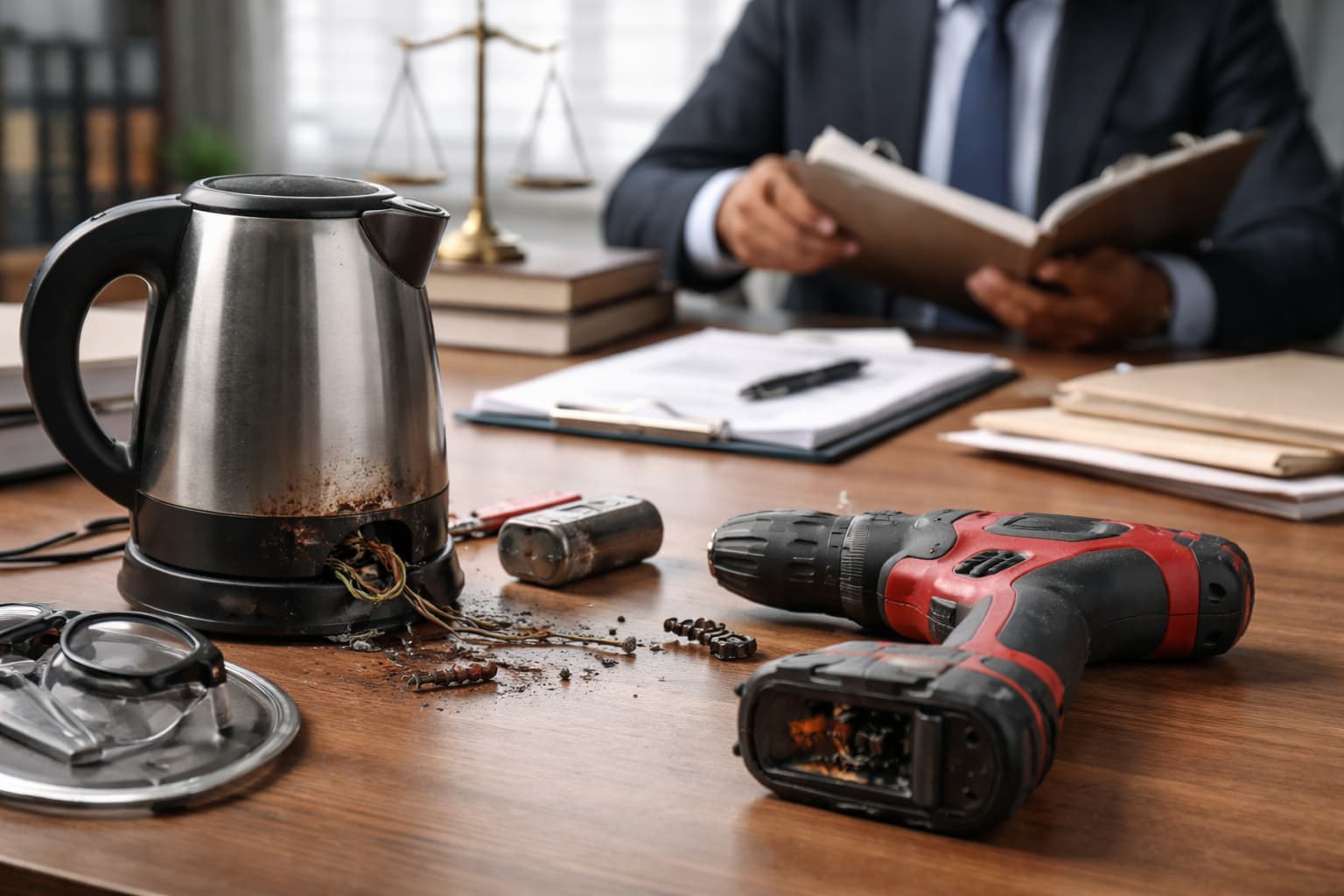
After a product causes an injury, throwing away the box may feel harmless. It can remove information that later becomes difficult to recover. Packaging, receipts, labels, instructions, model numbers, serial numbers, warnings, and the product itself may help identify exactly what was purchased and how it was intended to be used.
Preserve the Product in Its Current Condition
If it can be done safely, stop using the product and store it where it won’t be altered, repaired, dismantled, or accidentally discarded.
Product-liability law can involve manufacturing defects, design defects, warning issues, and other theories depending on the jurisdiction and facts. Cornell’s Legal Information Institute provides an overview of these general categories.
Don’t Test a Dangerous Product Again
Trying to recreate a failure can cause another injury and may change the item itself. Photograph the product and visible damage instead.
If the item poses an ongoing fire, electrical, chemical, or other immediate hazard, personal safety should take priority over preserving it exactly where it failed.
Keep the Packaging and Instructions
Boxes and labels may contain model numbers, lot numbers, manufacturing information, warnings, and distributor details. Instruction manuals can show directions that accompanied the product.
People browsing personal-injury legal coverage may encounter broad negligence discussions, but product cases often require careful identification of the specific item involved.
| Item | Information Preserved | Potential Use |
|---|---|---|
| Product | Physical condition | Allows later inspection |
| Packaging | Model/lot details | Helps identify exact item |
| Receipt | Seller and purchase date | Documents transaction |
| Instructions | Warnings and directions | Shows supplied information |
Protect Purchase and Transaction Records
Save printed receipts, emailed confirmations, order histories, credit-card records, warranties, registration information, and shipping documents.
Specialized product-related legal reporting may discuss complex liability disputes, but your own purchase trail provides direct information about where the product came from and when it entered your possession.
If no paper receipt remains, check retailer accounts or email archives before records become harder to locate.
Document the Injury and Incident
Write down what the product was doing immediately before the problem occurred. Note who was present, where the item was located, and what happened afterward.
Someone consulting general legal Q&A material should avoid assuming that a malfunction alone establishes a successful claim. Product identity, condition, causation, injury, and applicable legal standards can all matter.
The U.S. Consumer Product Safety Commission also provides a system for consumers to report unsafe consumer products through SaferProducts.gov.
Evidence Mistakes to Avoid
Discarding the item after receiving a replacement can eliminate the physical product that may need examination. Allowing an unrecorded repair can create a similar problem because the original condition changes.
Another mistake is saving the product while discarding the packaging and receipt. Those materials may contain identifying information not printed clearly on the device itself.
Don’t publicly speculate that a manufacturer knowingly sold a defective product when the facts have not been established. Preserve evidence first and let the investigation determine what happened.
When Legal Advice May Be Appropriate
Consider contacting a qualified lawyer when an alleged product failure causes serious injury, major property damage, permanent impairment, or a dispute over what caused the incident.
Potential defendants and legal theories can differ depending on the product and jurisdiction. Filing deadlines also vary, and some cases require technical investigation or expert analysis before responsibility can be assessed.
Frequently Asked Questions
Should I return a product that injured me?
Before returning, repairing, or surrendering a potentially important product, consider whether it may need to be preserved. For a significant injury claim, obtaining legal guidance first may prevent accidental loss of evidence.
Is a receipt required for a product injury claim?
Not necessarily in every situation, but purchase documentation can help establish the seller, approximate purchase date, product version, and transaction history.
Should I report an unsafe product to the CPSC?
Consumers can submit reports concerning unsafe consumer products through SaferProducts.gov. Reporting to a regulator is separate from pursuing any private insurance or legal claim.
Preserve What Identifies the Product
The product, packaging, instructions, photographs, and purchase records form a connected evidence trail. Keeping only one piece can make later identification and investigation harder.
For substantial injuries or complicated product failures, preserve the item without unnecessary alteration and seek jurisdiction-specific advice before handing over potentially important evidence.
This article provides general legal information and is not a substitute for advice from a qualified attorney about a specific product injury claim.