Clunks, squeaks, rattles, and knocking noises from a vehicle’s suspension should not be ignored simply because the car still moves normally. Suspension components control wheel movement, ride stability, steering behavior, and tire contact with the road.
Noise can come from worn bushings, links, joints, mounts, springs, or other components. Finding the source early may prevent additional wear and reduce uncertainty about vehicle safety.
Notice When the Noise Happens
The timing of a suspension noise often provides useful clues. A clunk over potholes suggests a different type of movement from a squeak that appears while turning slowly or entering a driveway.
People browsing automotive reading resources may see long lists of possible failures. Rather than choosing a part from a list, note exactly when the sound occurs.
Pay attention to whether it happens during braking, acceleration, steering, rough-road driving, or body movement.
Compare Noise With Changes in Handling
Noise deserves more attention when it appears alongside wandering steering, excessive bouncing, unusual body movement, vibration, or uneven tire wear.
Those symptoms don’t identify one specific failed component, but they provide additional information for inspection.
Look for Visible Problems Without Taking Risks
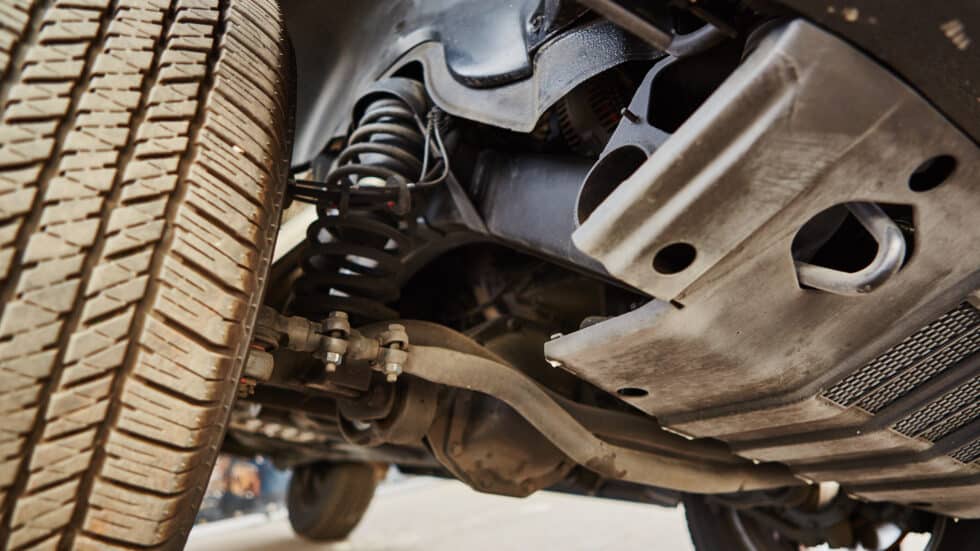
A basic visual check may reveal a broken spring, damaged dust boot, leaking shock or strut, loose-looking component, or tire rubbing against something nearby.
Articles covering maintenance content may make suspension inspection appear simple, but working beneath a vehicle requires proper lifting equipment and support. Never crawl underneath a vehicle supported only by a jack.
If safe access is unavailable, leave the inspection to a repair shop.
| Noise or Change | When It Appears | Possible Area to Inspect |
|---|---|---|
| Clunk | Bumps or potholes | Links, joints, bushings |
| Squeak | Slow suspension movement | Bushings or mounts |
| Rattle | Rough roads | Loose or worn parts |
| Repeated bouncing | After bumps | Shocks or struts |
Check Tires Along With Suspension Components
Uneven tire wear can sometimes appear when suspension or alignment problems affect how a wheel meets the road. Examine tread across the width of each tire and compare wear between sides.
Following road-safety reading can reinforce general maintenance habits, but the specific pattern on your own tires matters more during troubleshooting.
Also check tire pressure because incorrect pressure can change ride feel and create symptoms that may be confused with suspension problems.
Don’t Replace Parts Based Only on the Sound
Suspension noises travel through the vehicle structure, making location deceptive. A sound that seems to come from one corner may originate from a nearby mount, steering component, exhaust bracket, brake part, or another source.
A proper inspection involves checking components for looseness, wear, damaged rubber, abnormal movement, and other signs rather than replacing whichever part is commonly blamed online.
Diagnosis becomes especially important when several suspension components have similar mileage and wear.
Mistakes That Can Increase Repair Costs
Continuing to drive for months because a noise is “only annoying” may allow a worn component to affect tires, alignment, or nearby parts.
Replacing pairs of expensive components without confirming the fault can waste money. At the opposite extreme, replacing only the cheapest visible part may not solve a system with several worn components.
Another mistake is tightening suspension fasteners randomly. Some components have specific procedures and torque requirements, so guesswork can create additional problems.
Stop Driving When Handling Becomes Unsafe
Arrange prompt professional inspection if the vehicle feels unstable, steering response changes significantly, a wheel appears out of position, a spring is broken, or suspension movement becomes severe.
If the vehicle pulls unpredictably, has major steering looseness, or appears unsafe to control, avoid continuing normal driving. Towing may be safer than attempting to drive the vehicle to a repair shop.
Frequently Asked Questions
What causes a clunking noise over bumps?
Worn sway-bar links, bushings, ball joints, control-arm components, strut mounts, or other loose parts can create clunks. An inspection is needed because several components can produce similar sounds.
Can bad suspension cause uneven tire wear?
Suspension wear and alignment problems can affect tire contact with the road and contribute to irregular wear. Tire pressure, wheel alignment, and other mechanical issues should also be checked.
Is it safe to drive with a squeaky suspension?
A squeak alone does not reveal how serious the problem is. If it is persistent, worsening, or accompanied by steering, stability, tire-wear, or ride-height changes, the vehicle should be inspected.
Inspect the Cause Before More Parts Wear
Treat a new suspension noise as useful warning information rather than background sound. Record when it happens, look for safe-to-observe changes, check tire wear, and arrange an inspection when the cause isn’t obvious.
Early diagnosis can help distinguish a minor worn bushing from a problem affecting steering or stability. The important step is identifying the fault before continued driving turns one worn component into several.