
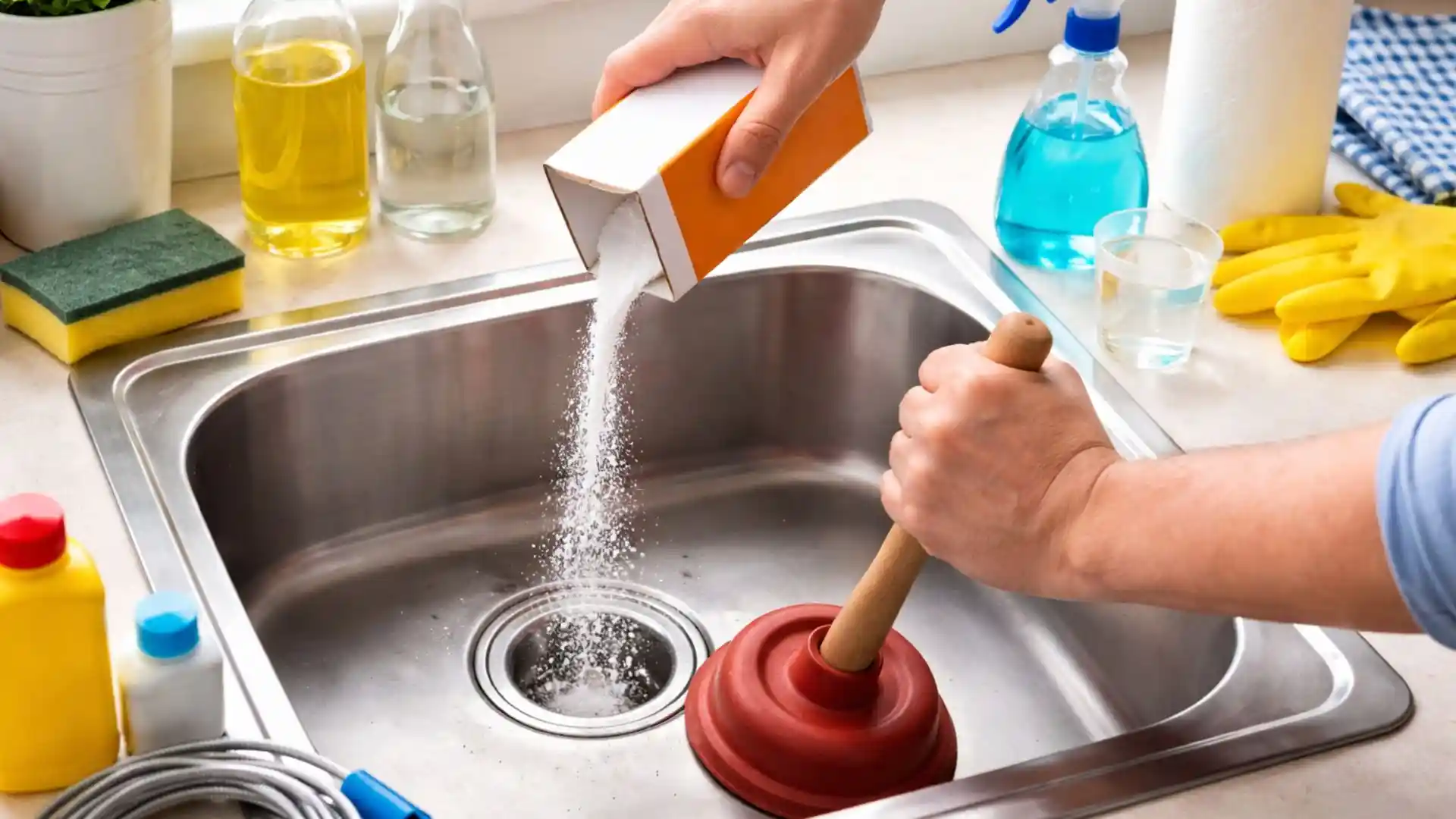
A sink that drains slowly or stops completely often contains physical buildup that can be removed without strong chemical cleaners. Clogged sink drains commonly collect hair, soap residue, grease, food particles, and other debris near the stopper or trap. Mechanical cleaning usually gives you more control because you can remove the material instead of trying to dissolve an unknown blockage.
Start at the Drain Opening
Remove standing water with a cup or small container if necessary. Then inspect the stopper or strainer for visible material.
Bathroom sink stoppers commonly trap hair below the visible surface. Kitchen strainers may collect food residue that gradually combines with grease and soap inside the drain.
| Location | Common Buildup | Useful Approach |
|---|---|---|
| Drain opening | Hair or food | Manual removal |
| Stopper assembly | Hair and soap | Clean stopper |
| P-trap | Sludge or solids | Remove and rinse |
| Deeper pipe | Compacted debris | Hand snake |
Pull Out Material You Can Reach
Wear gloves before handling drain debris. A small plastic drain tool can reach hair and soft buildup without requiring the pipe to be opened.
Keeping a few simple maintenance supplies together can make the next clog less disruptive, and broader everyday maintenance guidance can sit alongside your own household repair checklist. Avoid pushing visible debris farther into the pipe.
After clearing the opening, run a modest amount of water and observe the drainage speed before moving to the next step.
Clean the Trap Under the Sink
Place a bucket directly beneath the P-trap. Even a sink that appears empty can leave water inside this curved pipe section.
Loosen removable slip nuts carefully and lower the trap into the bucket. People interested in reducing dependence on aggressive cleaners may also keep low-tox cleaning habits in mind, although a plumbing blockage still needs to be physically cleared when solid material is present.
Clean the trap thoroughly, inspect its washers, and reinstall it in the same orientation. Test with a small amount of water while watching each connection for leaks.
Use a Hand Snake for Deeper Buildup
If the trap is clear, feed a hand-operated drain snake into the accessible drain line. Advance the cable slowly while rotating it so the tip can work through or catch debris.
Routine sink-area maintenance tips can complement the practical habit of noticing slower drainage early. A developing clog is easier to remove before the pipe becomes completely blocked.
Pull the cable back gradually and clean it as it emerges. Several short passes may be more effective than forcing the tool aggressively against resistance.
Where Chemical-Free Drain Cleaning Can Fail
Mechanical cleaning works well for many ordinary clogs, but it cannot solve every drainage problem. A blockage may be farther down the branch line, involve damaged piping, or affect a shared drain serving multiple fixtures.
Another mistake is repeatedly pouring homemade mixtures into standing water and expecting them to break apart dense hair or solid objects. Baking soda and vinegar may produce visible fizzing, but that reaction does not guarantee that a physical obstruction has been removed.
Frequently Asked Questions
Can I unclog a sink without drain cleaner?
Yes. Removing debris from the stopper, cleaning the P-trap, plunging correctly, or using a hand drain snake can clear many common sink clogs without chemical products.
Why does my sink clog again so quickly?
Recurring clogs can mean buildup remains farther inside the pipe or the same materials continue entering the drain. Hair, grease, soap residue, and food particles are frequent repeat contributors.
When is a clogged sink a bigger plumbing problem?
Pay closer attention when several drains clog together, water backs up into another fixture, unusual gurgling appears, or the blockage repeatedly returns after the local trap and drain line are cleaned.
Remove the Blockage Instead of Masking It
Begin with what you can see and reach. Clean the stopper, inspect the trap, and use a hand snake only when the blockage appears deeper. Physical removal lets you confirm that debris actually left the drain. If several fixtures are affected or the same clog keeps returning, the problem may extend beyond the sink and deserve professional inspection.

