Poor tire condition can increase the chance of losing traction, developing a flat, or experiencing a sudden tire failure. Regular checks won’t prevent every road-hazard problem, but inspecting pressure, tread, sidewalls, wear patterns, and visible damage gives you a better chance of finding trouble before highway driving places additional stress on the tire.
Check Tires Safely Before Looking for Damage
Park on a level surface away from moving traffic and allow the tires to cool before performing a routine inspection. You usually don’t need to crawl beneath the vehicle to spot the most common visible warning signs.
Walk around every tire, including the less visible inner portions where practical. Look for cuts, cracks, objects embedded in the tread, unusual swelling, and areas where the tread appears noticeably different from the rest.
Drivers reading vehicle care discussions may encounter many maintenance suggestions, but a physical walk-around remains one of the simplest checks available.
Maintain the Pressure Recommended for the Vehicle
Tire pressure should be checked against the vehicle manufacturer’s recommended specification, normally found on a placard or in the owner’s manual. Don’t assume the pressure printed on the tire sidewall is the correct everyday inflation target for the vehicle.
A reliable pressure gauge makes the check easier. Pressure can change with temperature and normal air loss, so occasional measurement is more useful than judging a tire only by appearance.
General automotive reference articles may discuss inflation from different perspectives, but your own vehicle’s specifications should guide the pressure you use.
| What You See | Possible Concern | What to Do |
|---|---|---|
| Low tread | Reduced remaining tread | Measure and assess replacement |
| Sidewall bulge | Internal tire damage | Avoid normal driving |
| Uneven wear | Alignment or suspension issue | Have cause checked |
| Repeated pressure loss | Leak or damage | Inspect and repair |
Watch the Tread Pattern, Not Only Tread Depth
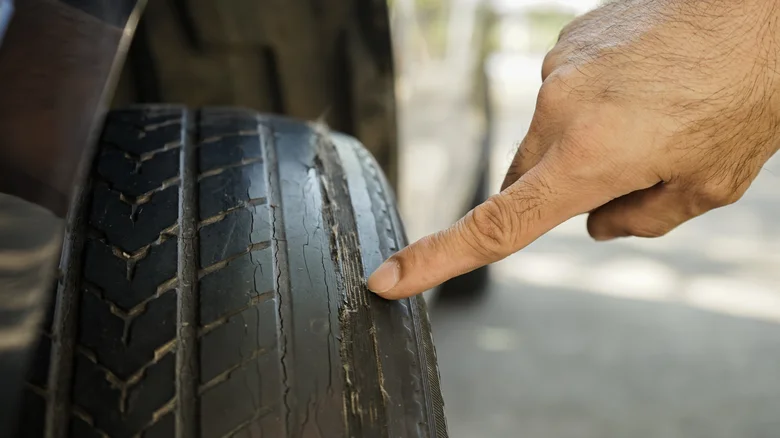
Tread wear should be reasonably consistent across the tire. Wear concentrated along one edge, in the center, or in patches can point toward inflation, alignment, suspension, balance, or other mechanical issues.
Built-in tread-wear indicators and a proper tread gauge can help you judge remaining tread more consistently. Tires that are worn to applicable replacement limits should not be stretched for extra mileage simply because they still hold air.
Related road-safety editorial coverage may encourage preventive habits, but unusual tire wear deserves mechanical investigation because replacing the tire without addressing the cause can allow the pattern to return.
Take Sidewall Damage Seriously
Sidewalls flex constantly while the vehicle moves. Bulges, exposed internal material, deep cuts, or significant impact damage shouldn’t be treated like harmless cosmetic marks.
Hitting a pothole or curb can damage a tire even when it does not immediately become flat. If a new vibration, pressure loss, bulge, or visible defect appears after an impact, have the tire inspected before continuing routine high-speed driving.
Repeated air loss also deserves investigation. Continually adding air treats the symptom without identifying why pressure keeps dropping.
Mistakes That Make Tire Problems Easier to Miss
The first mistake is judging condition only by whether the tire looks inflated. A tire can have incorrect pressure without appearing dramatically flat.
Another is checking only the front tires because they’re easiest to see. Rear tires can develop the same wear and damage problems.
Finally, don’t assume newer-looking tread means the entire tire is healthy. Sidewall damage, uneven wear, punctures, age-related deterioration, and impact damage can matter even when plenty of tread appears to remain.
Frequently Asked Questions
Can a tire blow out even if the tread looks good?
Yes. Tire failure can involve punctures, impact damage, structural damage, pressure problems, or other conditions that aren’t determined solely by visible tread depth.
Why does one tire keep losing air?
Repeated pressure loss can come from a puncture, valve problem, wheel issue, sealing problem, or tire damage. The source should be identified rather than repeatedly compensating by adding air.
Should I drive on a tire with a sidewall bulge?
A sidewall bulge can indicate internal structural damage. Avoid treating it as a normal cosmetic defect and have the tire professionally evaluated promptly rather than continuing ordinary driving on it.
Make Tire Checks Part of Normal Vehicle Care
You don’t need to wait for vibration, a warning light, or a nearly flat tire before checking condition. Inspect all four tires regularly, measure pressure correctly, watch tread wear, and respond to cuts, bulges, repeated pressure loss, or unusual wear patterns. A few minutes of inspection can reveal when a tire or related vehicle component needs professional attention before your next long drive.