
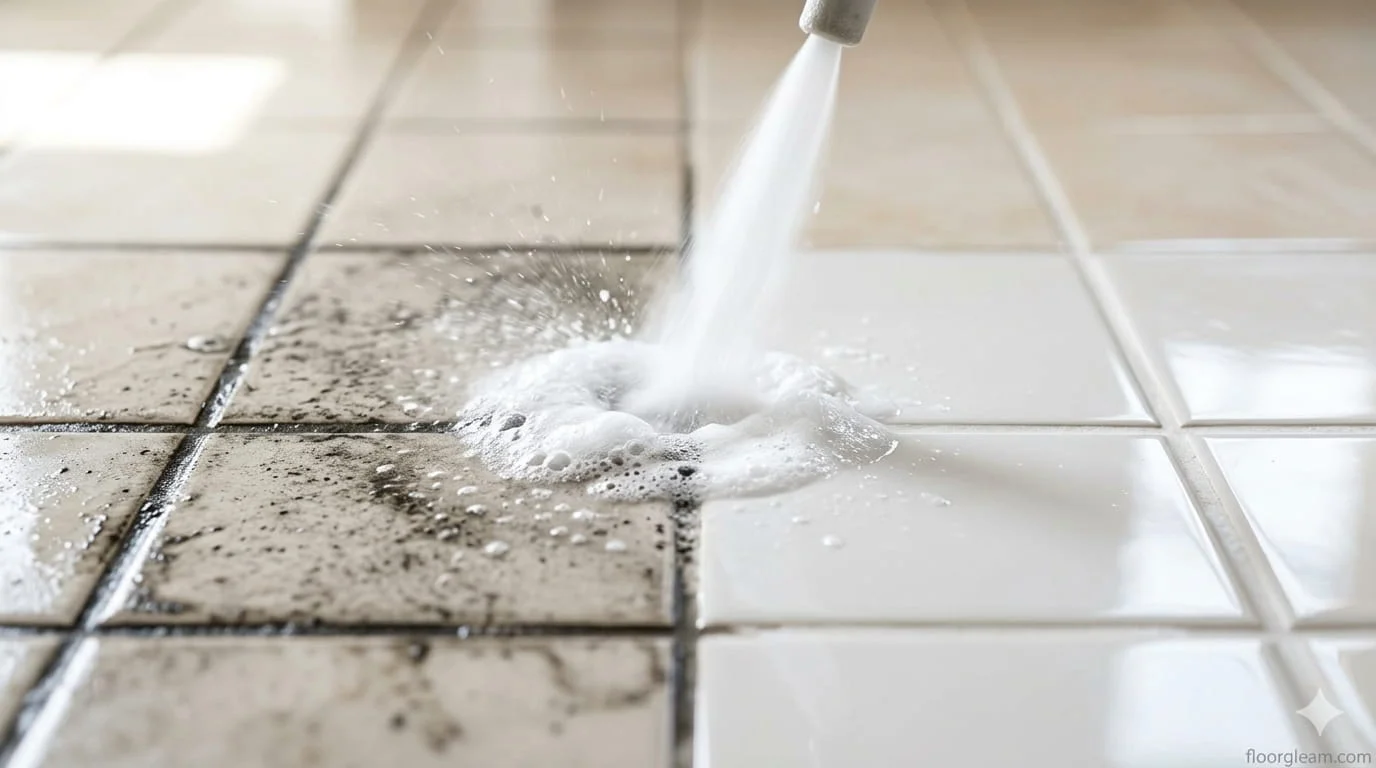
Grout can make an otherwise clean tile surface look neglected because its textured surface collects soil, soap film, and residue. Endless hard scrubbing isn’t always the best answer. Dirty grout lines usually respond better when buildup is softened first, cleaned with a suitable product, and rinsed before residue dries back into the joints.
Determine What the Grout Needs
Begin by vacuuming, sweeping, or wiping away loose dirt. Cleaning solution works poorly when it immediately mixes with dust and hair.
Check whether the grout is cement-based, epoxy, sealed, unsealed, damaged, or recently installed. Different materials tolerate different products, and harsh acids can damage some grout or surrounding stone.
Bathroom planning can influence how easily tiled areas dry after use. Browsing bathroom layout ideas may offer useful inspiration for ventilation, storage, and keeping wet items away from surfaces that are difficult to maintain.
Soften Buildup Before You Scrub
Apply a grout-safe cleaner according to its directions and give it the recommended contact time. Immediate scrubbing often wastes effort because the residue hasn’t had time to loosen.
Work in Manageable Sections
Clean a small group of grout lines rather than covering the entire floor or wall at once. That prevents cleaner from drying before you can rinse it.
Use a nylon grout brush or another tool appropriate for the surface. Moderate repeated strokes are usually more controllable than pressing as hard as possible.
Never mix bleach, ammonia, acids, or other household cleaning chemicals. Dangerous fumes or reactions can result.
Rinse the Joints Thoroughly
Once soil lifts, remove the dirty cleaning solution and rinse according to the product instructions. Residue left in porous grout can dry into another dull-looking film.
Ideas from tile cleaning inspiration can complement a routine, but the specific grout and tile manufacturer’s care instructions should guide product selection.
| Grout Condition | Better Approach | Avoid |
|---|---|---|
| Light surface dirt | Mild cleaner | Excessive scrubbing |
| Soap residue | Allow dwell time | Letting cleaner dry |
| Natural stone nearby | Stone-safe products | Acidic cleaners |
| Damaged grout | Gentle cleaning | Aggressive brushing |
Keep Grout Cleaner After Washing
Grout often becomes dirty again because surrounding conditions remain unchanged. Standing water, soap residue, cooking grease, muddy footwear, or weak ventilation can all shorten the time between cleanings.
Drying wet tiled surfaces can make a noticeable difference in showers and bathrooms. In kitchens and entryways, removing spills promptly prevents them from settling into porous joints.
Broader home improvement references may be useful when planning maintenance around tile, fixtures, storage, and other surfaces instead of treating grout as an isolated cleaning problem.
If grout remains badly discolored after thorough cleaning, staining may have penetrated deeper than routine surface soil.
Where Grout Cleaning Effort Gets Wasted
A common mistake is starting with the strongest chemical available. Strong products can discolor grout, weaken some materials, or damage nearby tile and stone without producing a better long-term result.
Another mistake is using a metal brush. It may scratch surfaces or erode grout joints.
People also keep scrubbing when the real issue is deteriorated grout, failed sealant, deep staining, or moisture behind the surface. Cleaning cannot repair missing or crumbling material. When grout is structurally damaged, repair may be more appropriate than another round of aggressive washing.
Frequently Asked Questions
Can baking soda be used to clean grout?
Baking soda is mildly abrasive and may be suitable for some surfaces, but it isn’t appropriate for every grout, tile, or stone combination. Check care recommendations first and test any homemade cleaning method in a small hidden area.
Why does grout turn dark again after cleaning?
Remaining residue, moisture, soap film, foot traffic, grease, or porous grout can contribute to rapid re-soiling. Proper rinsing and addressing the source of contamination usually matter more than increasing scrubbing force.
Should grout be sealed after cleaning?
Some cement-based grout may benefit from sealing, while epoxy grout and certain installations have different requirements. Allow the grout to dry fully and follow the grout or sealer manufacturer’s guidance before applying a sealing product.
Make the Cleaning Method Do the Work
Bright grout comes from the right process, not endless scrubbing. Remove loose dirt, soften buildup, use a surface-safe brush, rinse away residue, and let the area dry properly. If stains remain despite careful cleaning, inspect the grout itself before reaching for stronger chemicals. Sometimes maintenance solves the problem; sometimes repair is the more sensible next step.